









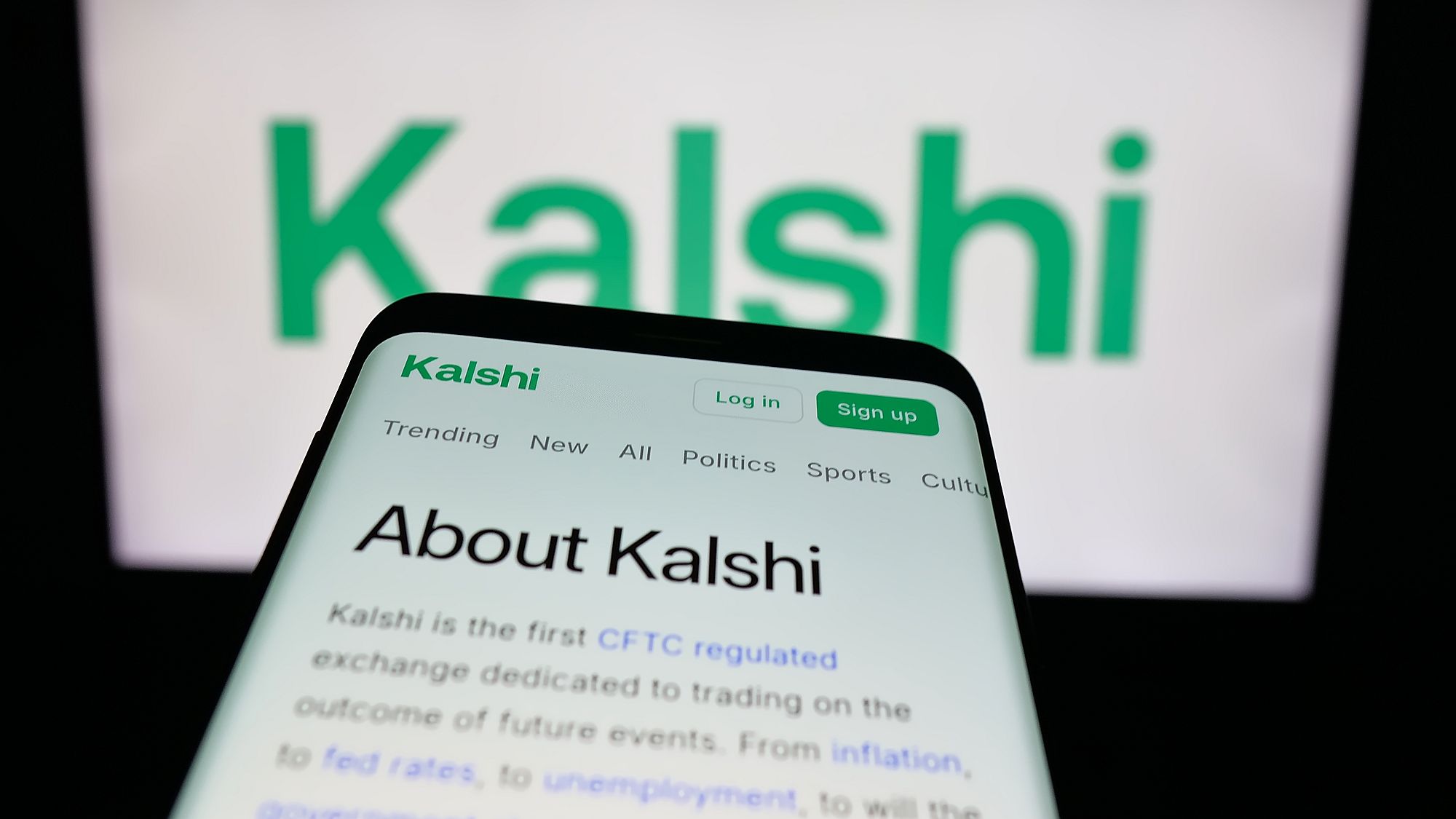
Predictive betting platforms are at the center of a heated debate between regulators and jurists regarding their regulation, considering that they are atypical instruments that offer a mix between traditional sports betting and financial derivative contracts.
Read also: Casino, on Marathonbet the Hot Race starts: valid slots, prize pool and bonus details
They were born offering binary options on political and financial topics but have expanded over time. In 2025, major platforms like Polymarket and Kalshi began to offer multiple choice and prediction options (therefore betting) on sports events, and since then the debate has become even more heated because state tax revenue and the survival of legal bookmakers (like Fanduel and Draftkings) have come into play, which – also for this reason – have lost millions in capitalization on Wall Street.
In the USA, state attorneys general and gaming regulatory bodies are taking very restrictive positions. The same is true in Europe.
However, an important ruling has recently arrived from the United States, specifically from a Massachusetts judge who has pinned Kalshi: it will no longer be able to offer “sports” bets.
The ruling is important because it makes a basic distinction on the nature of the object of the bet. If it concerns a sports event, it must fall under the jurisdiction of the state gambling commission.
The Massachusetts ruling that blocks Kalshi for sports betting
A Massachusetts judge has just filed what could become a key ruling for the entire sports prediction market industry in the USA: Kalshi can no longer offer its “event contracts” linked to sports outcomes to residents of the State.
What happened
On January 20, 2026, the Suffolk County Superior Court granted a preliminary injunction at the request of the Massachusetts Attorney General, Andrea Joy Campbell, blocking Kalshi from accepting new bets on sports events within the State.
The dispute arises from a lawsuit initiated in September 2025, in which the attorney general argues that Kalshi’s sports prediction contracts are, in substance, unauthorized sports bets – an activity that the State regulates with strict licensing rules and minimum age requirements (21 years) under local gambling laws.
Kalshi operates under CFTC supervision
Kalshi, for its part, has bet everything on the federal jurisdiction argument: the company insists that its markets are derivative products regulated by the Commodity Futures Trading Commission (CFTC), and therefore exempt from state gambling regulations.
However, in the USA, both regarding predictive betting and other issues (for example, irregular immigration), there is an open conflict between the federal government (and regulations) and individual states.
However, Judge Christopher Barry-Smith found this interpretation provided by Kalshi’s lawyers insufficient, stating that federal supervision of derivatives does not preclude the power of states to regulate activities that fall within their definition of gambling.
The judge’s reasoning
According to the judge, however, Kalshi’s sports markets “walk and talk” like sports bets in all respects, not like atypical financial instruments.
Read also: Juventus, attempt for Kolo Muani: what is needed for the return and the alternatives
Kalshi had offered sports contracts without a state license, even after regulatory warnings and enforcement actions in other states.
If Kalshi wants to operate legally in the field of sports betting, it must obtain a license from the Massachusetts Gaming Commission.
The injunction – which will fully come into effect if lower courts and the Court of Appeals do not suspend it – could require Kalshi to implement technical geolocation to block users in Massachusetts from accessing sports results prediction platforms.
This ruling could have implications for the entire market
This ruling is not an isolated case: it represents the first order of this type actually imposed by a state court against a sports prediction market operator. States such as Arizona, Illinois, Maryland, Nevada, and Ohio have already issued similar warnings or cease-and-desist orders against Kalshi and other platforms, but so far without reaching a judicial order with immediate effect.
The decision of the State of Massachusetts, if confirmed on appeal, could become a regulatory model that other state regulators will adopt to argue that sports prediction markets fall under gambling laws and not simple derivative financial markets.
The appeal
Kalshi has already announced that it intends to appeal the decision. It is likely that the battle could move to the Massachusetts Court of Appeals and potentially reach the highest levels of American jurisdiction if the issue of federal pre-emption versus state powers is to be addressed.

Kalshi is worth about 11 billion dollars, ownership
Kalshi, Inc. is one of the most well-known US prediction market platforms, founded in 2018 by Tarek Mansour and Luana Lopes Lara, two former financial analysts who met at MIT (Massachusetts Institute of Technology). Today it is headquartered in New York City and is a private company with a market valuation of approximately 11 billion dollars after a 1 billion funding round, with investors including Sequoia Capital, Paradigm, Y Combinator, and asset managers like Charles Schwab and Henry Kravis.
Kalshi is not a normal betting site: its offering is based on “event contracts”, financial contracts that allow users to buy/sell predictions on the outcome of real events — from weather and economic data, to politics, to sports and legislative results — with the contract price reflecting the market’s perceived probability. Unlike traditional bookmakers, Kalshi does not bet against the user but acts as an organized market where buyers and sellers meet, and earns profits through transaction fees.
The company operates as a regulated exchange in the United States under the authority of the Commodity Futures Trading Commission (CFTC), which in 2020 approved Kalshi as a Designated Contract Market — the first platform of its kind to obtain this federal recognition for predictive markets. This status allows it to offer tradable events, although it entails legal challenges with individual states (especially when Kalshi began offering markets on sports results), because some state regulators believe that certain contracts constitute actual unauthorized sports bets, as we have seen in the cited ruling.
In summary, Kalshi is trying to redefine the boundary between predictive finance and regulated gaming, attracting both institutional liquidity and regulatory attention, and positioning itself as a global market infrastructure for trading in advance on the outcome of real events. But the regulatory challenge will not be easy.
Read also: PokerStars Open Campione 2026: Tascone takes the KO, High Roller today