







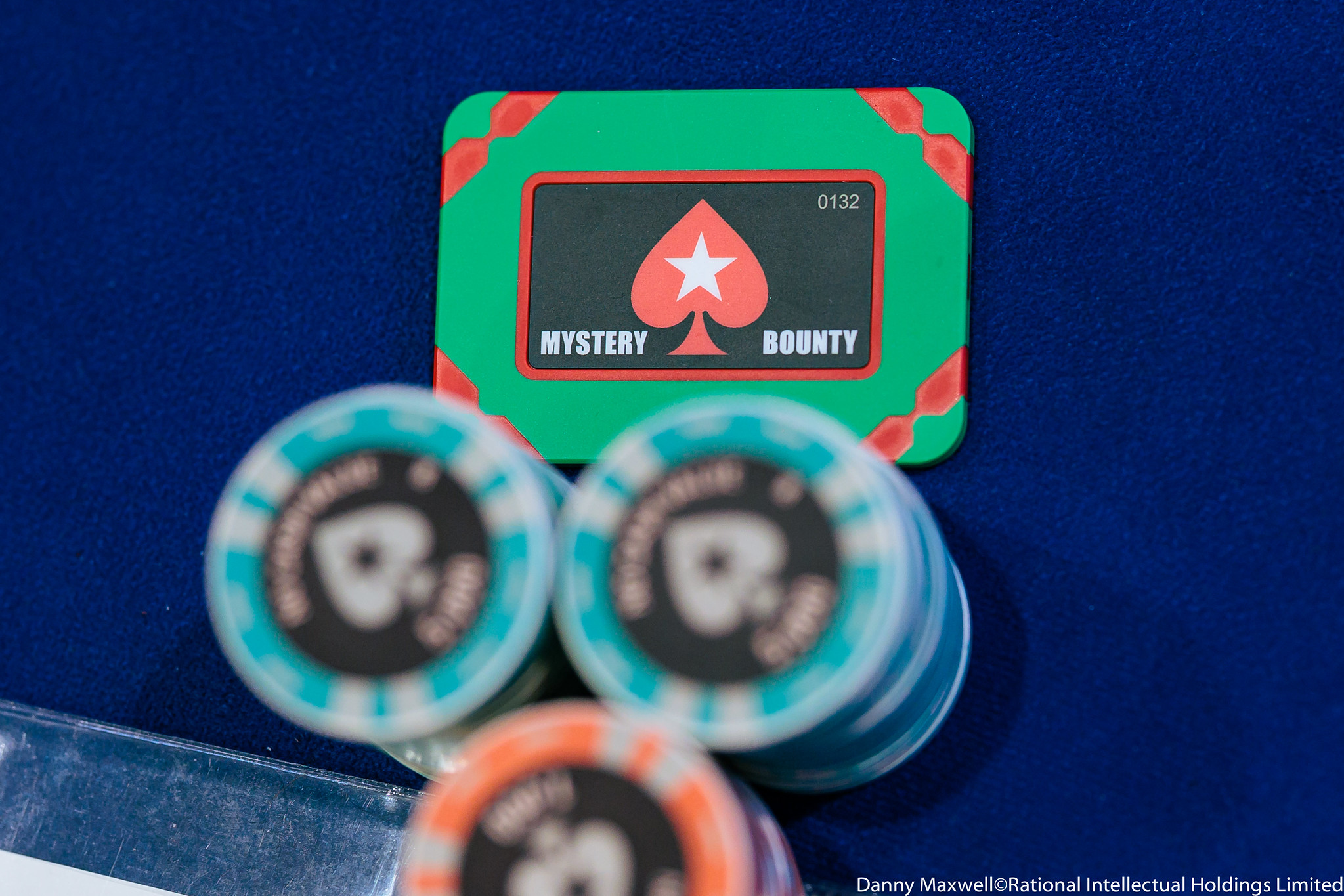
Few formats of poker have had such a meteoric rise as Mystery Bounty. In no time at all, what was born as an innovative format has become a staple of schedules, first for live poker and then also for online poker.
Read also: World Cup playoff predictions, the favorites for the playoffs with Italy (and not only)
As often happens with novelties, at the green felt and beyond, there was initially a need for an experimental phase to understand the peculiarities of the format, which are notable compared to both normal tournaments without bounties, and compared to those with normal or progressive bounties.
Now that the body of knowledge on mystery bounties has matured, here are coach Dara O’Kearney’s ten tips for tackling tournaments with the mystery bounty formula.
Late Registration
The coach’s first tip concerns the time to enter Mystery Bounty tournaments. Most events with this format see the mystery bounties activated on day 2, or at least long after the end of late registration.
“It stands to reason that the closer you start the tournament to the bounties, the more chances you’ll have to be in the running when they can be won.”
Play to Cover Opponents
To win opponents’ bounties, it’s obvious you need to have more chips than them. According to the coach, this should be a mantra in mystery bounty tournaments.
“In these tournaments, your priority should be to ensure you cover as many opponents at the table as possible, at least as you approach the start of the mystery bounty phase. This might mean taking some gambles to get a big stack. But it could also mean letting go of a profitable spot to maintain the chip lead. If re-entry is closing and you’re a short stack, it’s time to gamble. If you double up, that’s great. If you don’t double up, you can re-enter immediately with a medium stack, which should cover a decent number of opponents.”
Play Tighter if You Are a Bounty for Opponents
The coach advises not to bluff when opponents have more chips, and even more so if you are short.
“Your opponents will be looking for an excuse to put you all-in, not a reason to fold. The upside is that you can value bet thinner than usual.”
The Weight of Bounties is Greater at the Start of the Mystery Bounty Phase
According to O’Kearney, the time when you need to unleash maximum aggression is as soon as the mystery bounties come into play.
“Mystery bounties represent a large part of your equity at the start of day 2. The further you go, the more important it becomes to advance in the payout, perhaps to reach the final table. Play looser as soon as the mystery bounties come into play, and tighter as the day progresses.”
The Impact of the Maxi Mystery Bounty
The amount of the average bounty is enormously influenced by the presence or absence of the largest mystery bounty among those still extractable.
“If the biggest bounties are all gone, you should treat the tournament like a normal MTT. If they are still in play, then eliminating opponents should be your main goal. But don’t go crazy. If there are 200 players left, your chances of winning the biggest bounty are low. Play wider but always with survival in mind. If you are at the final table and a mystery bounty larger than the first prize is still in play, then you might be justified in taking a big gamble to win it.”
Read also: IPS Rozvadov: Di Giacomo smashes day 2, with him Kabrhel and 19 Italians
The Higher the Mystery Bounty Percentage, the Looser You Should Play
The more money goes into the mystery bounty prize pool, the more your priority should be to eliminate opponents.
“In tournaments where 50% of the buy-in goes into the mystery bounty prize pool, you should play looser than in tournaments where only 30% of the buy-ins go into the mystery bounties.”
Suited Broadways Have Higher Value
According to the coach, in mystery bounty tournaments, it’s inevitable to get involved in more family pots than in normal tournaments. This changes the type of hands that play well.
“Low pairs decrease in value because in a multiway pot you’ll find at least four overcards. Finding a set is the dream scenario, of course, but most of the time you won’t find it and you’ll have to fold. Suited broadways like KQs/KJs/QJs increase in value because they can make a straight or a flush, they are usually good if they make a pair, they block several strong hands of opponents, and occasionally, against very loose opponents, they don’t even need to improve. In mystery bounty tournaments, suited broadways are much stronger than low pairs.”
How to Get an Opponent All-in on the River
The Irish professional then has a trick to induce an opponent to put all their chips in the middle of the table.
“If you have a good hand and cover the opponent, a simple trick you can use to get them all-in on the river is to bet 10% of their stack on the flop. This might even mean overbetting the flop. By doing so, you can bet two-thirds of the pot on the turn, and on the river, you’ll have a shove for less than a pot-sized bet.”
The Timing of Drawing a Mystery Bounty is Irrelevant
With his second-to-last tip, coach O’Kearney debunks a superstition about mystery bounty tournaments that lingers in the field.
“There is no magic system; waiting for an opponent to be eliminated or trying to grab a bounty right away has no impact on your chances of drawing the biggest mystery bounty.”
Calculating Bounties
In closing, the coach provides the method for keeping track of bounties during the mystery bounty phase.
“When someone goes all-in, the easiest way to account for the bounty is to convert it into chips using this formula:
(starting stack * average bounty value) / buy-in
Add these chips to the pot if the player is already all-in. If they are not yet all-in, add these chips to the stacks.”